
Six Things, Volume 155
Puffinus puffinus | Diane | Names | taken | Eponymous Laws | Ratioed

Thing 1 – Puffinus puffinus
Yesterday was World Migratory Bird Day and, what with being in the middle of writing a book on animal migration and everything, I have Things To Say.
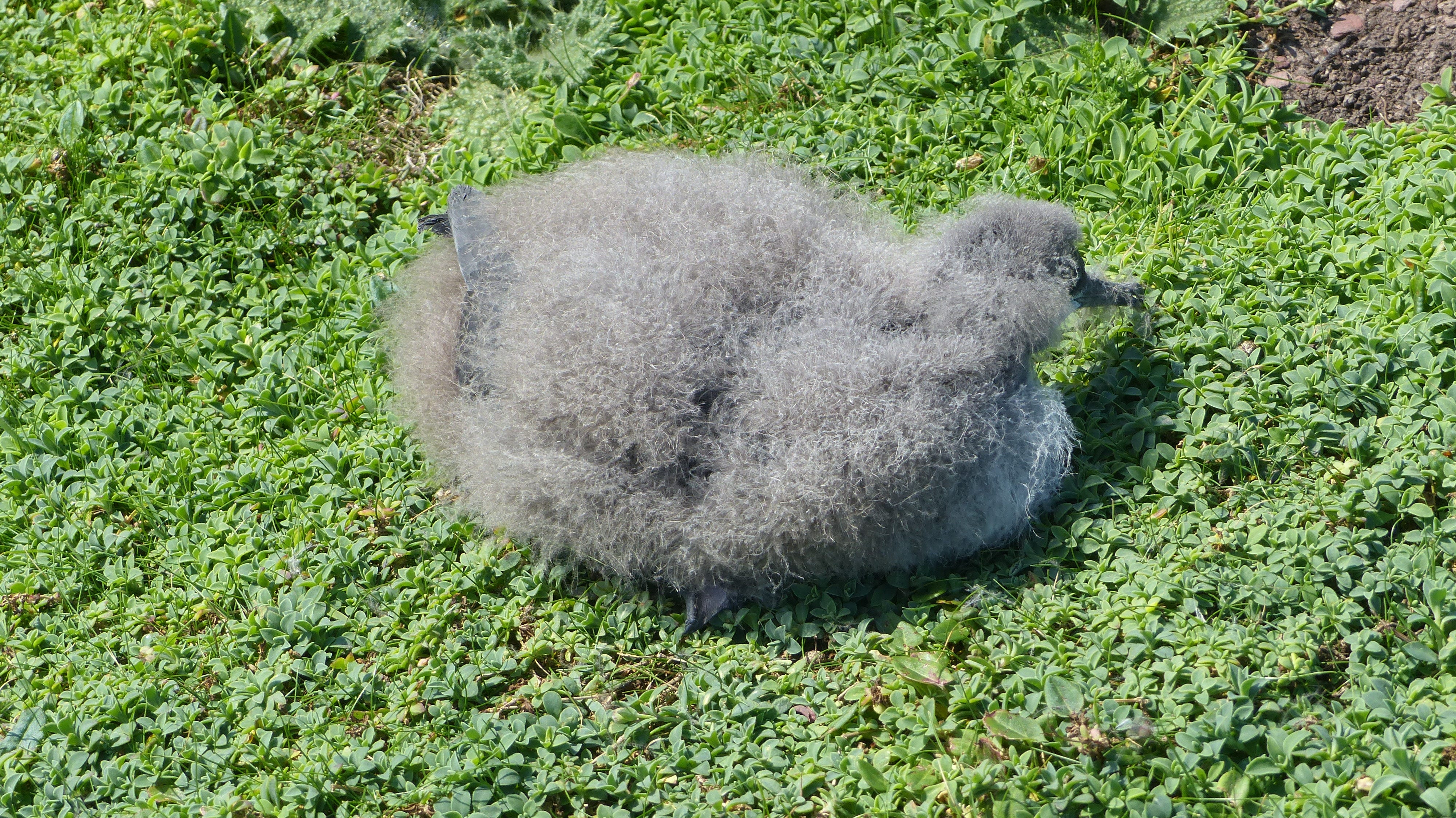
I could tell any one of billions of stories – birds are probably the most notorious migrants, after all, and for many people the most visible and easily encountered – and any one of them would boggle the mind (they’re how small and travel how far??) – but I’ve gone with the Manx shearwater, not least because I have this photograph of a Manx shearwater chick looking like the contents of a Hoover bag, and if I told you that within a month of it being taken this bird set off on its maiden flight all the way to Brazil, you’d probably look askance at me and suddenly find you have somewhere else to be.
But that is exactly what happened.
Even better, it did it all by itself, without anyone showing it the way, its parents having abandoned it once it had showed them it could feed itself. It converted the Hoover-bag plumage for actual flight feathers (you can just see the beginnings of them above its rear end), and spent a few days exercising its wings in preparation for the journey.
Then, probably a month or so after this photo was taken, it waddled across the rocks to an outcrop or cliff and launched itself into the air, flying quickly away from its birthplace, banking and gliding and flapping on stiff wings low across the water towards, yes, the coast of Brazil. About 7,000 kilometres across the featureless ocean.
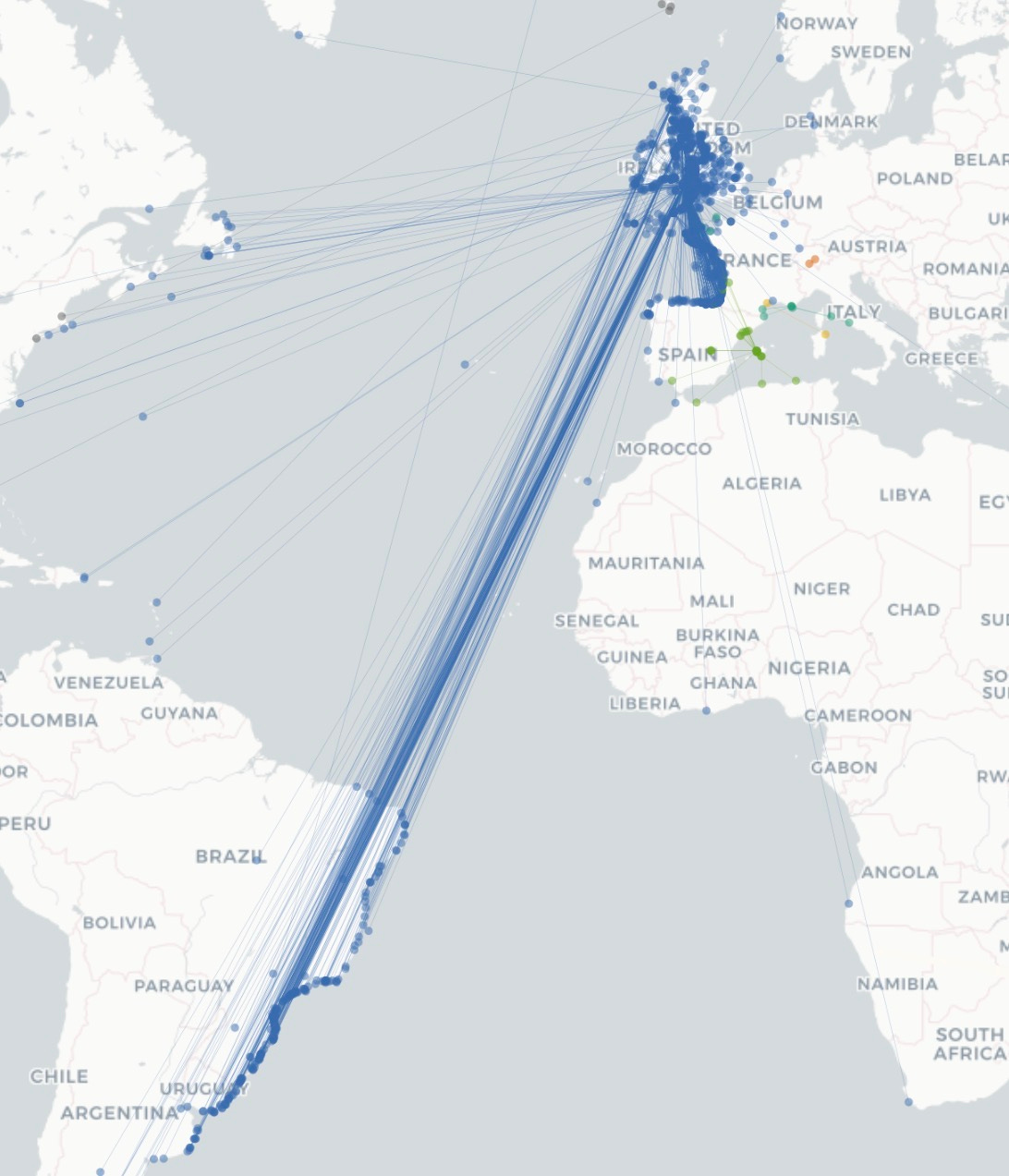
This map, from the excellent migration atlas, gives you an idea – although as each dot represents the beginning or end of a journey, and the lines merely link them in the most direct way possible, the situation is inevitably more complex. Birds (despite what you may believe from the expression ‘as the crow flies’) generally eschew the purely straight line.
The point is, HOW THE HELL DO THEY DO IT? How do they do know where to go? One thing that helps is their ability to detect the Earth’s magnetic field, a boon for keeping them oriented to the north-south axis. And it’s thought they’re also genetically programmed for that first journey: “fly west for x amount of time, then southwest for y amount of time, stop when you see land.” Plus they have an incredible sense of smell, so can pick up olfactory cues from what to us seems like an utterly featureless expanse of water.
If our mind is boggled by this (and it really should be) we should also remember that what seems amazing to us is second nature to them. No doubt they would be equally dumbfounded by things we find relatively simple – placing an Ocado order, for example, or playing three chords on a guitar, or walking, an activity for which they have very little aptitude (experiencing this at first hand only serves to make these already endearing birds even more so).
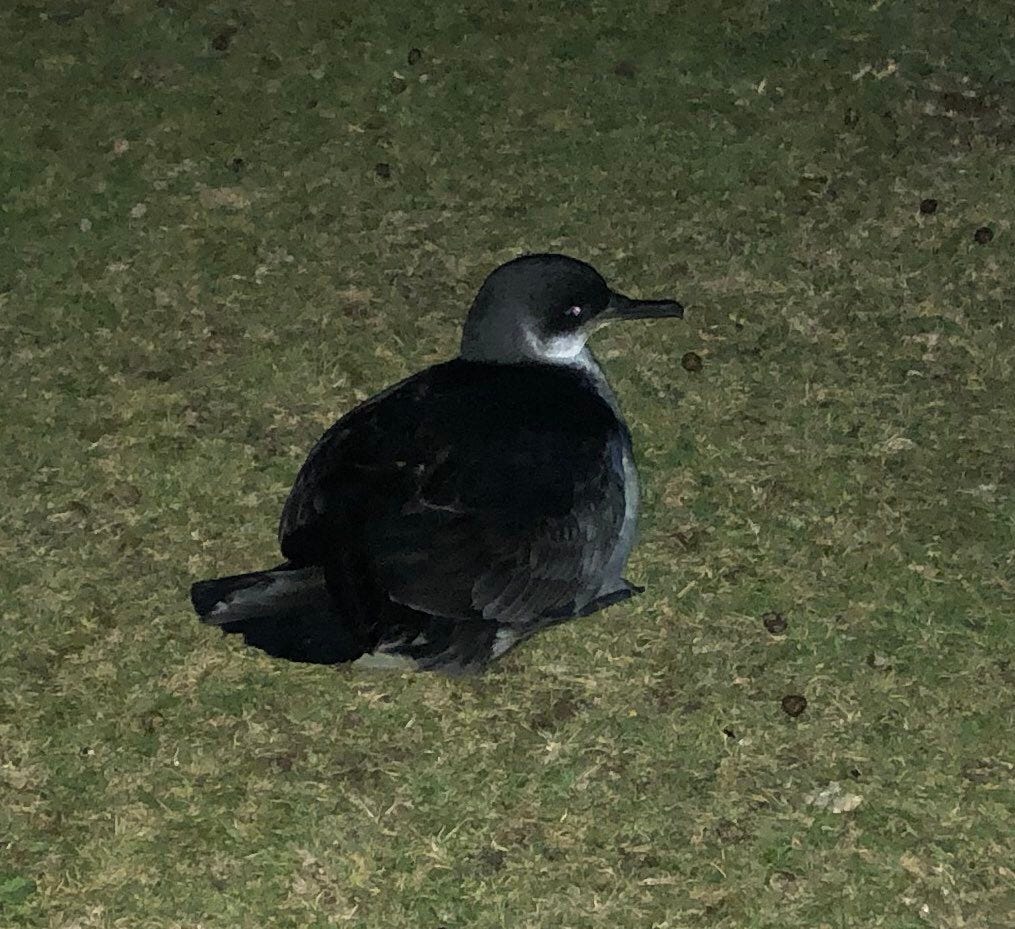
Mind you, they excel in other areas, possessing as they do an extraordinary homing instinct. Because not only do they know where to go on their first journey, they know how to get back.
In 1952, Rosario Mazzeo (a clarinettist in the Boston Symphony Orchestra and keen amateur ornithologist) visited Skokholm. In the kind of experiment that wouldn’t be allowed today, he took a Manx shearwater back to Boston with him, then released it at Logan airport. It made the 5,150-kilometre journey back to Skokholm in twelve and a half days. You can read more about that here.
Just one more thing about the Manx shearwater, something that might come in handy at a pub quiz one day: counterintuitively, its scientific name is Puffinus puffinus. Puffin – pophyn or poffin in Middle English – was the word for the fatty, salted meat of Manx shearwaters. Meanwhile, the puffin’s scientific name, in case you were wondering, is Fratercula arctica – ‘fratercula’ being a Medieval Latin word meaning ‘little friar’, a nod to their black and white plumage.
So let’s hear it for the Manx shearwater. About 40% of the world’s 11,000 or so bird species undertake some form of migration. While they’re all worth celebrating, few are as spectacular as the Manx shearwater’s.
Thing 2 – Diane
“Memories are simply moments that refuse to be ordinary.”
On June 8th in New York, Bonhams will hold a live auction called The Architecture of an Icon, featuring “a thoughtfully curated selection of fine art, interiors, iconic fashion, personal objects, and other creative touchstones” from the much missed Diane Keaton.
Along with the live auction there are three online ones, each focusing on a different aspect of her impeccable and inimitable style – Tailored and Timeless, At Home With Diane, and Chapters of an Edited Life. Even if your chances of buying anything from the auctions are slim (or maybe they’re not? I’m not assuming anything, and I’m genuinely tempted by, for example, her photobooth strips) it’s a thoroughly enjoyable browse.
Thing 3 – Names

How popular is your name? How popular has it been over the last 150 years? How many name-based stats can you bear?
Find out with Name Daisy, a baby name explorer based on US Social Security Administration data. Very nicely presented, with loads of options for viewing the data, plus a handy comparison tool.
Thing 4 – taken

Another fascinating tool, this time telling you what a webpage knows about you when you visit it. Quite a lot, it turns out, and very quickly.
This is Volume IV of an ongoing project. Volume I tells you what the world did while you visited it. Volume II is the sky you missed. Volume III is what was already at your feet.
Thing 5 – Eponymous Laws
Oh no oh no oh no MASSIVE RABBIT HOLE KLAXON.
This is a Wikipedia page devoted to a list of eponymous laws. Some favourites, not entirely chosen at random:
– Cunningham’s Law: the best way to get the right answer on the Internet is not to ask a question; it’s to post the wrong answer.
– Muphry’s Law: if you write anything criticizing editing or proofreading, there will be a fault of some kind in what you have written.
– Hofstadter’s Law: it always takes longer than you expect, even when you take into account Hofstadter’s law
The last one particularly applies to this volume of Six Things, which I started working on four hours ago thinking it would take two hours, max.
Thanks to the excellent Ewa on Bluesky for sharing it. It’s Ewa’s birthday today and she celebrated it by starting the most wholesome thread in the history of the internet. (Only visible to logged-in users, I’m afraid)

Thing 6 – Ratioed

Oh this is fun. All you have to do is draw the perfect rectangle to the ratio required (1:1, 16:9, 1.618:1, that kind of thing). Turns out I am both brilliant and awful at it.
Migration… yesterday watched a tern catch a fish. But in an Oxford college lake!!!