
Six Things, Volume 148
Kākāpō | Line of Sight | Happy | Trees | Fish Doorbell | Tube Game

Thing 1 – Kākāpō
The kākāpō is a now notorious nocturnal flightless parrot, endemic to New Zealand and quite spectacularly predisposed to making life hard for itself. Flightlessness is all well and good if, like the kākāpō, you evolve in splendid isolation from land predators. But when humans come along, bringing with them rats and cats and stoats and so on, things get more difficult. As Douglas Adams put it in Last Chance To See (the book he wrote with Mark Carwardine about endangered species):
“Its reaction when confronted with a predator is that it simply doesn’t know what the form is. It has no conception of the idea that anything could possibly want to hurt it, so it tends just to sit on its nest in a state of complete confusion and leaves the other animal to make the first move – which is usually a fairly swift and final one.”
As a result, by the 1990s, the population was down to 51 individuals.
In the kākāpō’s favour as a conservation flag-bearer, it is extremely adorable. Adams again:
“If you look one in its large, round, greeny-brown face, it has a look of serenely innocent incomprehension that makes you want to hug it and tell it that everything will be all right, though you know that it probably will not be.”
Look at this photograph and tell me he’s wrong.
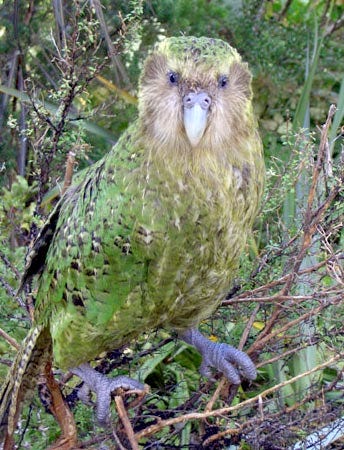
This is Sirocco. Now 28 years old, Sirocco gained notoriety in 2009 by trying to shag Mark Carwardine (in the follow-up TV series he made with Stephen Fry).
The frustrating thing about trying to save the kākāpō is that it seems not to want to save itself. Among other factors, its convoluted breeding process is tied to the fruiting of the rimu tree, an irregular and infrequent event. But this year sees just such an event, and there are high hopes that it could see a crucial boost to the current population of 236.
There’s a kākāpō nestcam. Recommended.
Thing 2 – Line of Sight
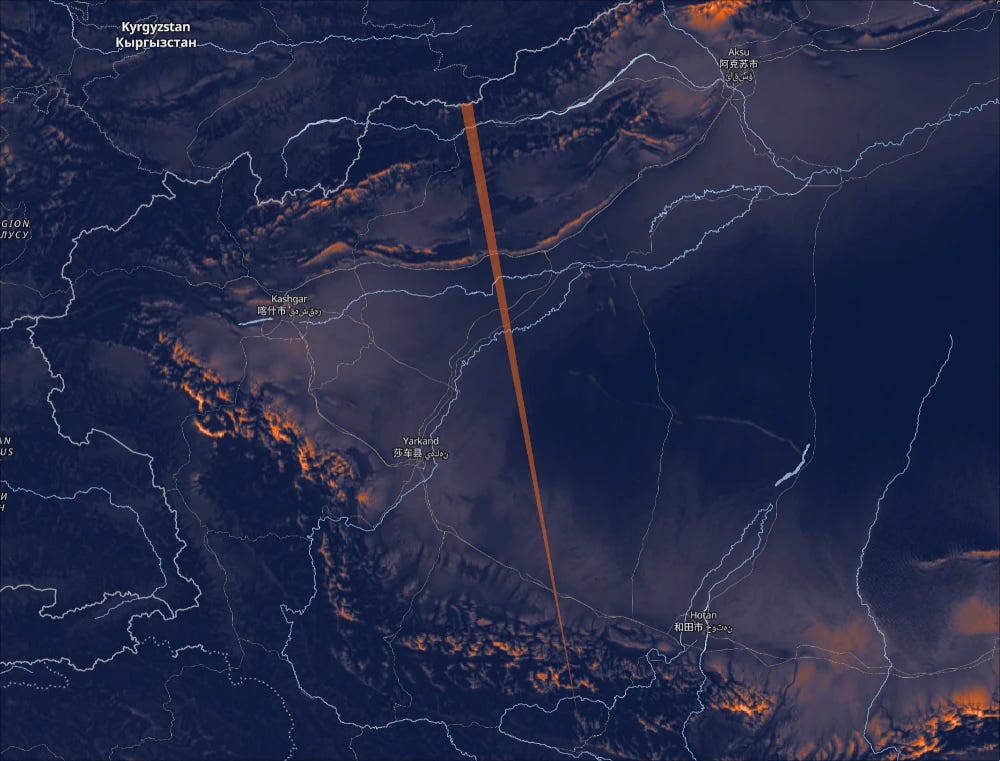
On a clear day you can see forever. Well, just over 530km, apparently. That’s the longest line of sight in the world (from an unnamed spot in the Himalayas near the India/China border to Pik Dankova in Kyrgyzstan) according to Tom Buckley-Houston,who’s spent eight years making this map, which gives you the longest line of sight from anywhere in the world. You will, no doubt, immediately seek out place familiar to you, and you might wonder at the results – bear in mind that the distances mentioned are a theoretical ideal, and don’t take into account the massive Leylandii hedge baulking your line-of-sight potential. Good fun.
Thing 3 – Happy
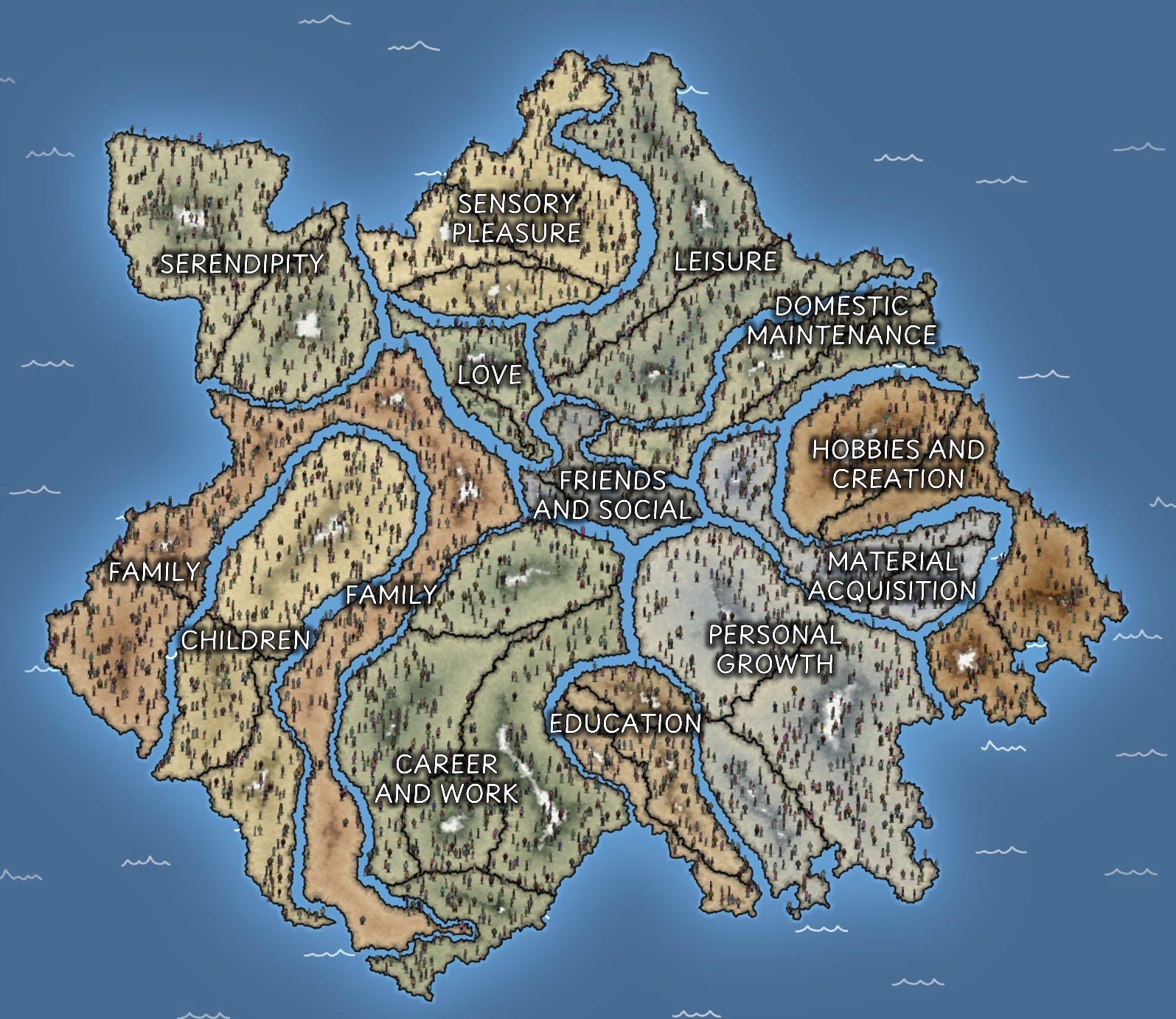
From The Pudding, a map of happy things, by Alvin Chang.
Thing 4 – Trees
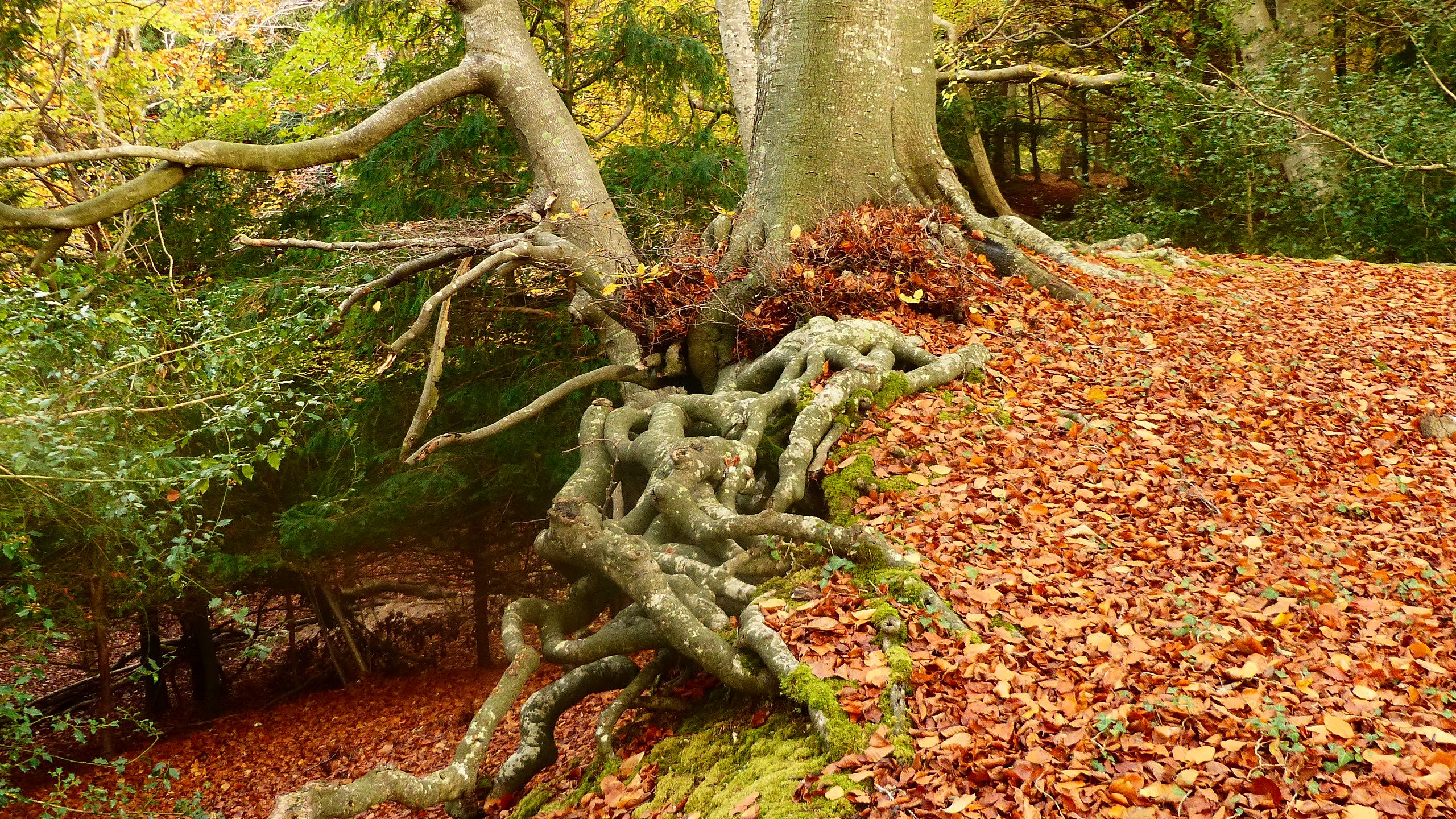
Always keen on the shapes of trees, the gnarliness of roots, and patient human endeavour, I am of course an absolute sucker for this collection of extraordinary tree-shaping from Atlas Obscura.
Thing 5 – Fish Doorbell
It’s the most wonderful time of the year – the Fish Doorbell’s back. I featured it last year and the year before that. It’s one of those things that merits an annual repeat.
Every spring, with the advent of breeding season, fish migrate to their spawning ground. Those looking to do it via Utrecht face a problem – namely, the Weerdsluis lock, which is mostly shut at this time of year. The solution is remarkably simple. Just install an underwater webcam to monitor the lock, stream it on the web, and set up a button so that viewers can alert the lock operator when a fish wants through. When there are enough fish the operator opens the lock.
Genius.
Thing 6 – Tube Game
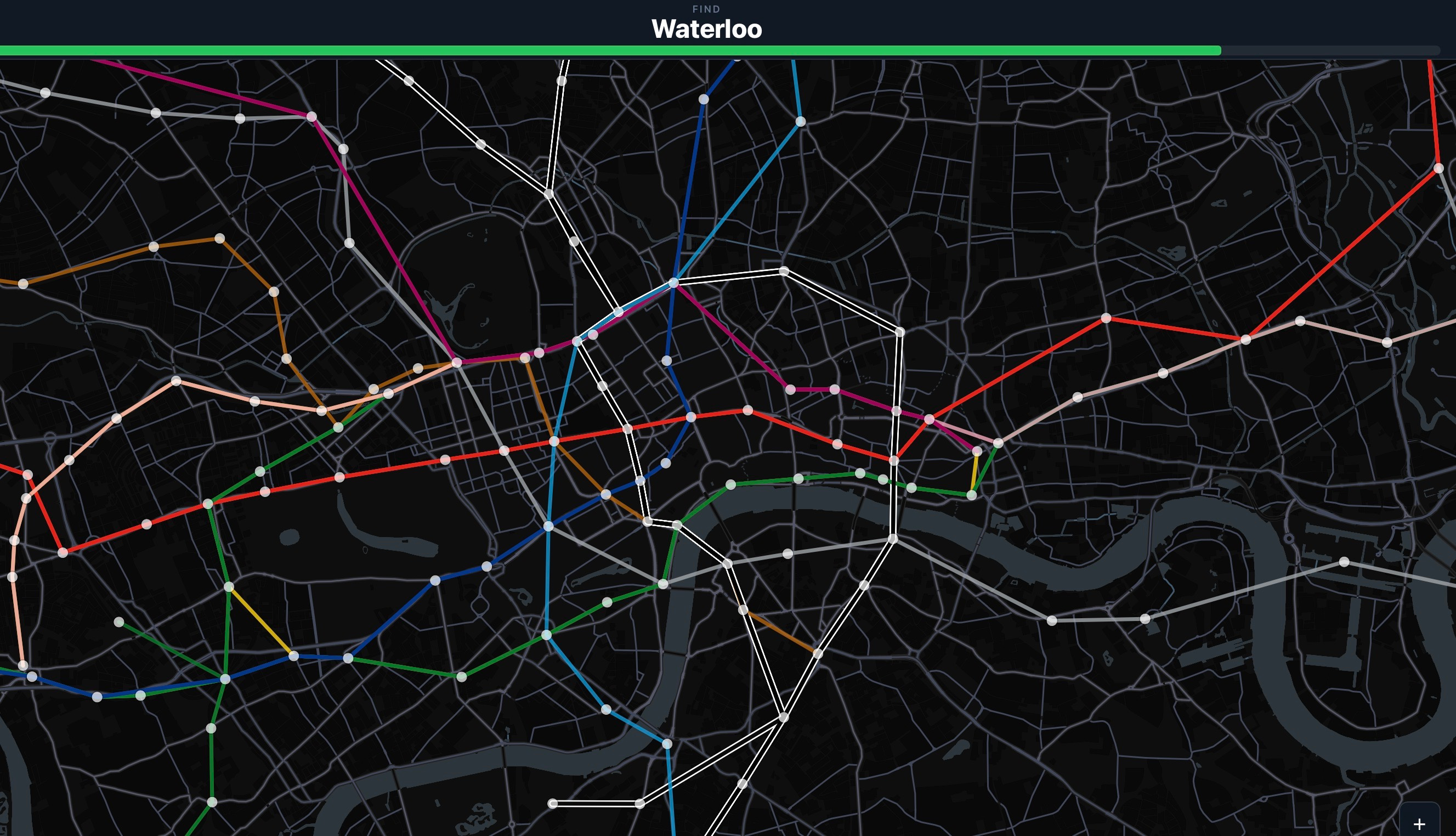
Thanks (or no thanks, more like) to Londonist for sharing this game, in which you have to find tube stations on a map against a stress-inducing countdown timer.
With apologies to those of you who have no knowledge of or interest in London and its underground rail network. You lot can have this one instead: drag six things into the correct order.
I'm loving that nearly 2000 of us are now staring at a stretch of empty water many miles away.....
Many years ago, an acquaintance working with kākāpō brought me a few tiny feathers, they were very beautiful. Not sure where they are now, likely folded into an old journal